Key Takeaways:
-
Peak season accumulates deferred maintenance issues that are easy to overlook in the moment but compound over months of heavy use.
-
Engine and cooling systems need attention to coolant condition, belts/hoses, and radiator airflow after a summer of sustained heat.
-
Hydraulic fluid and hoses should be checked for heat-related oxidation, contamination, and wear before conditions change.
-
Undercarriage components (tracks, tires, ground-engaging tools) accumulate the most wear during peak season and should be measured, not just eyeballed.
-
The goal is to catch a manageable set of issues now, turning potential unplanned breakdowns into planned repairs.
Peak season probably just put more hours on your fleet than any other stretch of the year. Long shifts, heat, dust, and back-to-back jobs don't leave much room to stop and catch up on maintenance, which means small issues that got noticed in June often get deferred, then deferred again, until they're just part of how a machine runs. The end of peak season is the first natural pause to go back and actually look at what those months of hard use did to your equipment, while problems are still small and before the weather turns.
This isn't a spring wake-up checklist or a winter storage guide, both of which we've covered separately. This is the checkpoint in between: a system-by-system look at what to inspect right after your busiest stretch, so you head into fall with a fleet that's caught up rather than one that's quietly accumulating damage.
Why the End of Peak Season Deserves Its Own Checkpoint
Deferred maintenance builds up silently during the busiest months, not because anyone's being careless, but because there's rarely a slow week to catch up during peak season. A belt that showed early cracking in June, a hydraulic hose that had a little more wear than usual, a filter that ran a bit past its interval, none of those are emergencies on their own. But strung together across months of the hardest use your fleet sees all year, they add up.
Fall also comes with its own set of new demands. It’s not just a wind-down from summer. Cooler mornings and warmer afternoons put more temperature swing stress on rubber and seals than a summer of consistent heat does. Shorter days mean more hours running in the dark. Fall rain in a lot of regions means more mud and moisture than the dry conditions of late summer. Catching the wear from peak season now, before those conditions show up, is the difference between a planned repair on your schedule and an unplanned one on a jobsite.
Engine and Cooling: Check What the Heat Left Behind
A summer of sustained high heat is hard on a cooling system even when nothing fails outright. Check coolant condition, not just its level, since heat cycling and time both degrade coolant's ability to protect the system. Inspect belts and hoses for cracking or glazing that heat exposure accelerates, and don't assume a hose that looked fine in May still does after a full season of high-temperature operation. If you haven't already, this is worth cross-referencing against how engine cooling systems and cab air conditioning held up through peak season, since both systems were working at their hardest for months and are worth a real look now rather than a quick glance.
Clean radiator and condenser fins of a full season's accumulated dust and debris, since that buildup happens gradually enough to go unnoticed until airflow, and cooling performance, is already reduced. Change engine oil and filters that are due, especially if peak-season hours pushed a machine past its interval while it stayed in constant rotation.
Hydraulics: Assess a Season's Worth of Heat and Load
Hydraulic fluid that ran hot all summer doesn't reset itself once temperatures drop. Check fluid condition for signs of oxidation or contamination that built up over months of high-temperature operation, and replace hydraulic filters that have been working overtime during peak-season load. Inspect hoses and cylinder seals for weeping, cracking, or abrasion wear, since heat and sustained pressure are exactly the conditions that turn a borderline hose into a failed one, and a hose that made it through summer isn't necessarily one that's still in good shape.
Undercarriage and Tracks: Tally the Wear From a Full Season of Hours
Peak season puts more cumulative hours on tracks, tires, and ground engaging tools than any other part of the year, and that wear is worth measuring rather than eyeballing. On tracked machines, check chain tension and look for pitch elongation beyond spec, since a summer of long hours on dry, abrasive ground accelerates wear at the pin and bushing joints. If you haven't looked closely at track links and shoes since spring, the end of peak season is the right time.
On wheeled machines, check tire tread and pressure, since a full season of hard use wears differently than shorter stretches of light work. Inspect ground engaging tools, bucket teeth, and cutting edges for wear that crossed the replacement threshold sometime during the busy months without anyone stopping to check.
Cab, Electrical, and Lighting: Get Ahead of Shorter Days
Heat is hard on batteries, and a battery that's borderline now may not have shown it yet, since summer starts are usually easier than the cold mornings ahead. Test battery condition and clean terminals before cooler weather makes a weak battery's problems obvious at the worst time.
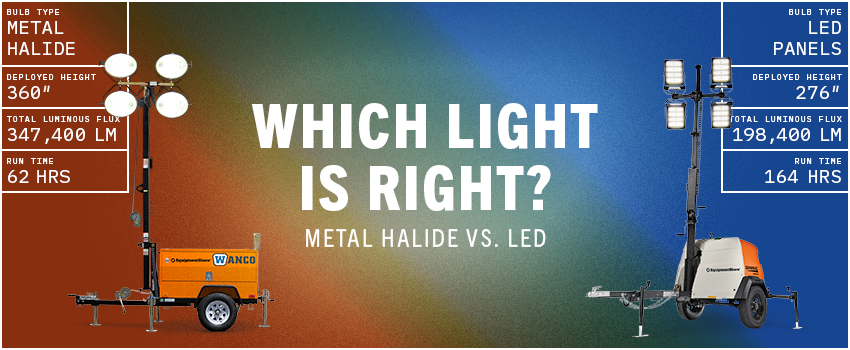
This is also the moment to think about lighting differently than you did in June. Shrinking daylight means more of your crew's shift happens in the dark, which puts more demand on whatever light towers are in your fleet. If it's been a while since you compared your options, LED and metal halide light towers serve different jobs, and fall is a good time to make sure the right ones are in rotation before winter's shortest days arrive.
Attachments and Lubrication: Reset Before the Next Push
Grease fittings that got serviced on a rushed schedule during peak season are worth a proper pass now. Regrease every fitting on the machine, including attachments that saw heavy use, since dry pins and bushings wear fast and a summer of neglect there compounds quickly. Inspect attachment wear points and cutting edges you may have flagged during the busy months but didn't have time to address, and knock those out now while there's room in the schedule.
Closing the Loop on Peak Season
An end-of-season inspection isn't about finding everything wrong with a machine, it's about catching the handful of things that peak season didn't leave time for, before fall conditions make them worse and before winter, if you're heading toward storing equipment for the season, makes them harder to fix. If you ran through our pre-summer checklist back in June, this is the other half of that same conversation, looking back at what the season actually did instead of forward at what it might do.
Once your inspection turns up what needs attention, EquipmentShare Shop carries OEM and quality aftermarket parts across cooling, hydraulics, undercarriage, electrical, and lighting, so you can close out the gaps that peak season left behind before fall work ramps up around you.